Review: The Village, by Bill Owens (Jamaica 1964-66)
Neiger Green-Patrick (Haiti, 2005) reviews Bill Owens’s The Village. This photography book is available on Amazon and Bookshop.org.
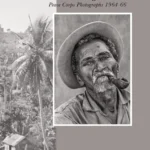 Title: The Village
Author: Bill Owens
Published: January 25, 2014 (True North Editions)
Review by Neiger Green-Patrick (Haiti, 2005)
Before diving into this review, I must preface it by sharing that I am a student of documentary photography. My Peace Corps service in Haiti was made more dynamic by the presence of my Nikon 35mm. The way my community was drawn to the lens opened a view of Haiti that felt nothing short of magical.
In The Village, Bill Owens elevates the everyday with a narrative and aesthetic sensibility that’s graceful. Moving beyond the conventional portrayals of Jamaica—lush greenery, crystal clear waters, and unapologetic use of color—Owens captures the daily rhythms of Central Village and the life of the communities that most visitors might not see.
Through the intimacy of service and proximity, he offers viewers a more grounded, deeply resonant version of Jamaica—one that is under-appreciated, yet essential to its cultural fabric. This book is a tribute to the graceful pride of daily life, of uninterrupted duties, the ritual of appreciation and honor, and of the quiet contributions made by every community member.
To my surprise, I found within the book a portrait that instantly transported me to my own childhood in Liberia, in West Africa: A girl having her hair braided between the squatted legs of her mother, auntie, or sister. The image immediately recalled the smells and sounds of home. This is the power of documentary storytellers like Owens—able to evoke not just memory, but sensory connection across continents.
Like other noted photographers such as Larry Sultan and Laura Migliorino, Owens uses his lens to document rituals that are inherited rather than written, and spaces where intimacy and sociology intersect. The Village, much like Owens’s Suburbia, presents the ordinary as profound, offering portraits of life that are often unseen and uncelebrated.
As Victoria Sheridan notes in the foreword to The Village, Owens’ place in the canon of documentary photography may have begun with service, and a 35mm Leica, but what solidifies it is his ability to turn the mundane into a meditation on dignity, pride, and the shared desire for a life of meaning.
Neiger Green was born and raised in Liberia, West Africa to parents who believed in international experiences and volunteer work, having themselves served with Crossroads Africa and Youth For Understanding (YFU). In 1990, she and many others fled Liberia at the beginning of a 14-year civil war. In her second year of living stateside, she was introduced to tennis and later landed a tennis scholarship to Clark Atlanta University, where she was introduced to the Peace Corps. Upon graduating, she joined the Peace Corps, completed her service and then pursued a graduate degree at Duke University’s Center for International Development as a Peace Corps Fellow. She currently lives in Atlanta with her family, works in academic medicine and volunteers as a photographer for international projects in health care and education.
No comments yet.
Add your comment