Peace Corps Writers 2014 Award For Best Non-Fiction

PEACE CORPS, MY STORY IN BITS AND PARTS 1. Before the Peace Corps was established I was working as an…

FIRST GIVEN IN 1990, the Paul Cowan Non-Fiction Award was named to honor Paul Cowan, a Peace Corps Volunteer who served in Ecuador from 1966 to 1967. Cowan wrote The Making of An Un-American about his experiences as a Volunteer in Latin America in the ’60s. A longtime activist and political writer for The Village Voice, Cowan died of leukemia in 1988.
•
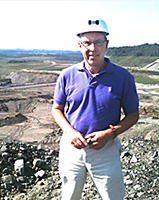
Author Larry Leamer on a mountaintop removal site
CONGRATULATIONS to Laurence Leamer for winning the 2014 Paul Cowan Non-Fiction Award from Peace Corps Writers for his legal thriller that tells the story of a coal giant CEO who sets out to destroy a small mine owner in West Virginia, The Price of Justice: A True Story of Greed and Corruption published in 2013. Larry receives a small cash award, and a certificate.
.
Review of The Price of Justice
first published in Peace Corps Writers on April 17, 2013
The Price of Justice: A True Story of Greed and Corruption
by Laurence Leamer (Nepal 1964–66)
Times Books
$30.00 (hardcover), $17.99 (paperback), $8.99 (Kindle), $29.95 (audio CD)
448 pages
May 2013
Reviewed by Tony D’Souza (Ivory Coast 2000-02, Madagascar 2002-03)
COAL HAS LONG BEEN A METAPHOR in our culture for the dark seed inside the greedy soul; the color of it, its hardness, all that compressed, combustible power. The pits where it’s dug are among our most basic conceptions of hell. “It’s dark as a dungeon,” Johnny Cash sings in his song of the same name, “damp as the dew/danger is double/pleasures are few/It’s dark as a dungeon way down in the mine.”
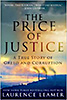 Larry Leamer in his new book, The Price of Justice: A True Story of Greed and Corruption, discovers something even darker; the heart of a West Virginia coal executive whose lust for union busting, corporate expansion and profit leads to the deaths of scores of miners, poisoning of vast swaths of his home state, hundreds thrown out of work, thousands diseased, smaller companies bankrupted, and ultimately the very nature of American jurisprudence mocked, abused and corrupted.
If this sounds like a robber baron tale from the dirty days of the Gilded Age, one might be surprised to learn Leamer’s dateline: The Price of Justice begins in West Virginia in 1998 and follows a court case, Caperton vs. Massey, all the way to the US Supreme Court and today.
Leamer is a master of meticulous non-fiction storytelling; he’s at the height of his powers in this book, into his fifth decade as one of our premier book-length journalists. His antagonist is Don Blankenship former head of Massey Energy, sixth largest coal producer in the US. Under Blankenship, Massey ignored basic mine and environmental safety standards in the name of an ever fatter bottom line and destroyed smaller competition through fraud.
“I’ve tried to understand him,” a miner’s widow says in Leamer’s telling after she takes a wrongful death payment from Blankenship’s company. “He lost his humanity. Once he got a taste for that power, nothing was going to stop him from going higher and higher. If I could give the settlement back and put him in jail, I would.”
Blankenship is famous on YouTube for attacking an ABC producer who attempted to interview him; he’s also notorious for having spent $3 million to oust an unfriendly judge from the West Virginia Supreme Court of Appeals, installing instead a conservative who would rule in his favor in the $75 million Caperton vs. Massey.
The case, now ongoing in Virginia, served as the basis for John Grisham’s The Appeal. It’s such a heinous travesty of justice that even Grisham has said that Leamer’s carefully illustrated anatomy of Blankenship’s evil is the book he wished he’d written. A page turner that distills tort law and Supreme Court legalese into a gripping story, The Price of Justice counts among its many successes its ability to lay bare the extent of Blankenship’s cynical wrong doing.
Of the thuggish Blankenship, Leamer writes:
Blankenship’s mother had an affair while her husband was in the army. When he returned and discovered that she had borne a child who was not his, he wanted nothing to do with either of them. Blankenship had the curse of a bastard son. In 1980, he became the office manager at Rawl Sales, a subsidiary of the A. T. Massey Coal Company. He believed that you could never give in. You could never compromise. You could never settle. You stood head to head with your foes, and sooner or later they flinched and walked away. That was what Blankenship did at Massey every day.
As his narrative vehicle, Leamer takes Caperton vs. Massey from the beginning, introducing the aristocratic Hugh Caperton, owner of a struggling coal mining operation, who cares deeply about his miners. Blankenship covets Caperton’s coal and is jealous of his blueblood roots; he ignores the terms of a contract to humiliate and starve his smaller rival into bankruptcy. Broke, Caperton finds a fearless Pittsburgh “odd couple” of lawyers, David Fawcett and Bruce Stanley, willing to sue “King Coal” on contingency because it’s the right thing to do. Leamer chronicles the lawyers’ decade-long campaign against Blankenship, and Blankenship’s court-stacking tactics against them.
The battle against Blankenship leads to divorces, broken health, ruined careers and crushed spirits. Leamer writes of one of the lawyers:
When Stanley came home late, as he usually did, his wife and his daughters were almost always already there. They were a close family, and most nights, Stanley talked of Blankenship and Massey and the continuing struggle. His family worried that this obsession might cause a stroke or a heart attack. He acted as if he were the only person who could stop Blankenship. His wife and daughters were proud of Stanley and his struggle, but after all these years and all this work, had he even begun to bring Blankenship down? What had Stanley truly achieved, and who was paying the price?
Blankenship’s appetite for money, power and coal is insatiable, and Caperton’s two lawyers are equally obsessed with defeating him. There are twists and turns in this book that put any legal thriller to shame; photos of Blankenship cavorting with a West Virginia judge and their much younger girlfriends on the French Riviera leads to a turning point that takes the case to the US Supreme Court. At the highest American court — just as had happened in West Virginia — conservative Justices Scalia and Roberts signal they’ll vote in the coal baron’s favor even before the case has been fully heard.
Will the Caperton lawyers convince Justice Kennedy to cast his swing vote in their favor? Or will the Supreme Court allow Blankenship’s purchasing of the West Virginia legal system to become the new American standard?
Leamer has taken on one of the most cynical cases of corporate malfeasance from the George W. Bush era-which was riddled with them — and humanized it. As beautiful side note to his central story, he chronicles the struggles of dozens of poor West Virginians trampled by “King Coal,” almost as if he — like the Caperton lawyers — simply refuses to let Blankenship win.
•
Laurence Leamer is the best-selling author of fourteen books, including The Kennedy Women and Madness Under the Royal Palms. Leamer is an award-winning journalist whose work has appeared in the New York Times Magazine, Harper’s, Playboy, and Newsweek. He lives in Washington, D.C., and Palm Beach, Florida.
•
Reviewer Tony D’Souza’s has contributed to the New Yorker, Playboy, Esquire, Outside, Granta and Mother Jones. His latest novel, Mule, was optioned by Warner Bros.
PEACE CORPS, MY STORY IN BITS AND PARTS
1.
Before the Peace Corps was established I was working as an intern at WGBH-TV the NET station then located above a former roller rink on the M.I.T. campus just across from Boston’s Charles River in Cambridge Massachusetts and working for the Nieman Foundation for Journalism at Harvard’s leader Louis Lyons in his twice-weekly interviews and New England news programs.
There was much talk with persons such as Kennedy himself, his brother Robert, Eleanor Roosevelt, Herbert Humphrey, Harold Stassen, Adali Stevenson about the need for such a dynamic national corps that might counter the bad stuff with the good.
I joined the new group, the Peace Corps, when Jack Kennedy announced it through our station, and by the end of August 1961 was in Ghana. (And by the way, I worked on the announcement back at WGBH-TV back at our station. It was our assembly of the footage brought back from D.C. by our director Paul Noble and our cameraman Don that was broadcast nationwide.)
2.
Many orbits of the moon since the optical points that have since circled reflect observations of the good done, and as well the negative winds that always swirl.
Returned Peace Corps Volunteers have done much good (and as THE TOWERING TASK film shows are still at it). While many of us have made nothing of that significance happen, we look and watch, and help in small ways, and at least do not add to resident evils and maybe mitigate them trying while we live to recognize and celebrate those who make lives be enriched in positive directions.
3.
There is a lot of nuttiness to the phrase “Leo is dead serious”. So am I who believed in progress, in the basic goodness of persons. I pass out of history: this continues. While I live I am steward, mechanic, actor, helper. Peace is a place in every breath. The Peace Corps matters. You continue to learn ways it matters you never considered.
There is a lot of nuttiness in how I look back and how I see my past. My Hair Was Severely Brushed and My Damp Face Looked Pink Painted Over and Blotched in a faded sepia photograph of 65 years ago.
I had a young, firm face then wide-eyed waiting to catchit, whatever ‘it’ was, take it apart to understand what the virus life was presenting to me, me who couldn’t then have seen myself or my kind as a virus swarming out of our planet attempting to conquer and perhaps colonize stars. I sat at my window looking at the large, heavy cones being attacked by huge awkward crows disturbing other life in that tree, greedy things.
4.
I recall great grand-mother Jane Kennedy-Carson-Fraser Delehant, “Grammy”, warning against following the crows before you die, the way rodents do who pick up the greedy crows’ leavings.
I now see, I am a crow. Though part of a system, I, as well, begin to be conscious with a bad conscience envisioning what Grammy also foresaw: geese walking over my grave.
There is a lot of nuttiness I hear in Quaker-inflected thees and thous still long 75 years after she died, when I was 10, of her ‘cautions’ and ‘jokey’ warnings: “Everybody’s odd but thee and, me dearie, AND sometimes I wonder about thee”, She knew. I see it now. She was born in the early 1860’s. I go back there with her here now that I am her age.
I have told my story before about 1960 as that intern at WGBH-TV, meeting JFK twice — once seeking the Democratic Party nomination and the second time AS the nominee, both times when he was the guest on Louis Lyons’ (Nieman Journalism Foundation’s Curator, Harvard) news program, on which I was his assistant.
On one, I think the first, Lyons spoke about Hubert Humphreys’ idea (of what would come to be called the ‘Peace Corps’ but then unnamed, as something similar to the American Friends Service Committee program abroad).
Then Senator John Kennedy replied in his best almost happy/ smart manner that it was a good idea (saying ‘good’ ideas from another candidate were GOOD ideas) and that as he continued
“When I am president, I will start such a program” (or words pretty close to that, and ending with his handsome head cocked to the side and smiling — you know like the cat that ate the cream). I was 23 then and it thrilled me, not just the idea for beginning such an organization but as much for the joyful intelligence and daring-do in a politician.
5.
As a Peace Corps Volunteer heading to Ghana in late August 1961 in the White House, I met as the PRESIDENT John Fitzgerald Kennedy in the Rose Garden and later in the Oval Office along with other volunteers from the first 3 groups (Columbia, Tanganyika, Ghana first in the field).
6.
This for me has been a long, long trail a-winding since June 1960 on the MIT campus along the Charles River in Cambridge, a Boston University graduate student and a WGBH-TV intern (having come up from Dallas, a North Texas State graduate student with a Lowell Institute Fellowship for Cooperative Broadcasting) becoming the assistant or ‘technical-director’ on the Louis Lyons 15-minute twice weekly NEW ENGLAND NEWS and Interviews.
Lyons was curator of the Nieman Foundation for Journalism at Harvard and got many persons (Eleanor Roosevelt, Adlai Stevenson, Harold Stassen, Senators Hubert Humphrey and John F. Kennedy — the latter 3 seeking nominations, etc.) and each of them seemed to touch on some kind of non-military public service abroad (like the Friends/ Quaker service abroad programs and others that were brought up.)
7.
Hurrying along, I recall Senator Kennedy responding to a Lyons’ inquiry about such a program and replying that it sounded like a good idea and that he didn’t discount ‘good’ ideas coming from anywhere (and now, remember that the term “The Peace Corps” hadn’t been even thought up then) and Senator Kennedy saying
“WHEN I AM PRESIDENT….” And him starttomg such all the while smiling and maybe almost laughing you know just as he might do like the cat that ate the canary in exuding such CONFIDENCE and being so clever covering a lot of political territory that way and hishead tilted/ right shoulder shrugging slightly. I tell you that KENNEDY was a hoot. Then, later, after, and he became the nominee of the Democrats he came back in autumn and it was much of the same, and this being still before a PEACE CORPS name.
8.
By the next Spring 1961 with JFK as the PRESIDENT he did establish the US PEACE CORPS just as he’d said, and the call went out and I took the first test in the basement of I think it was the Sanders building on the Quad on a Saturday morning.
And in a few months, got the invitation to join the Peace Corp. I remember being told I’d be training to go to China. Others recalled the same. The caller had not know about Ghana.
9.
I went in June 1961 to University of California Berkeley to train. sure enough, to go to Ghana,and I went Aug 31 from Washington D.C. HAVING BEEN brought up to the WHITE HOUSE with the others including those trained to go to Columbia, Tanganyika, and maybe also some of these to go also later to the Philippines to be addressed by president John F. Kennedy in the Rose Garden and then each of us had our picture taken in the Oval Office shaking hands with the President.
10.
The ‘we’ from the Ghana-One contingent (49 or 50 on the plane, with Arnold Zeitlin the 50th who’d join us not long after—and it was Arnold, a lifelong journalist who just maybe three years later who would write the very first book about the Peace Corps) got bussed to board the TWA 2 engine airplane that took us with 2 stops, for refueling to the Azores, and then to Dakar, Senegal as it reared west up at us from the far west of AFRICA.
After that, then, to Accra, Ghana. There is much more to say of course and I’ll save that for another time maybe but the story was well-told by one of our group, Robert Klein, in BEING FIRST — AN INFORMAL HISTORY OF THE EARLY PEACE CORPS, published in 2010 by Wheatmark press (with the ISBN NUMBER 908-1-60494-457-0 and the Library of Congress LCCN NUMBER 201092686). Bob Klein died a few years back –he did a good job with that book.
(C) Copyright Edward Mycue 8 February 2021 Monday